Haushelden

 Deutsch
 Українська
 Español
 Polski
 Türkçe
 Svenska
 Nederlands
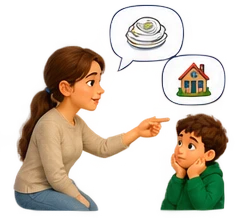
You say it nicely once. By the third time, you’re shouting.
“I did hear you. I just didn’t feel like it – and then Mum was suddenly cross and I got banned from something.”
How often do you nag your children each day?
Let me prove that you don’t have to think of everything all the time – and that I can get on top of school by myself. A family app for fewer arguments, more independence and better marks.

Developed with an educator from after-school childcare.

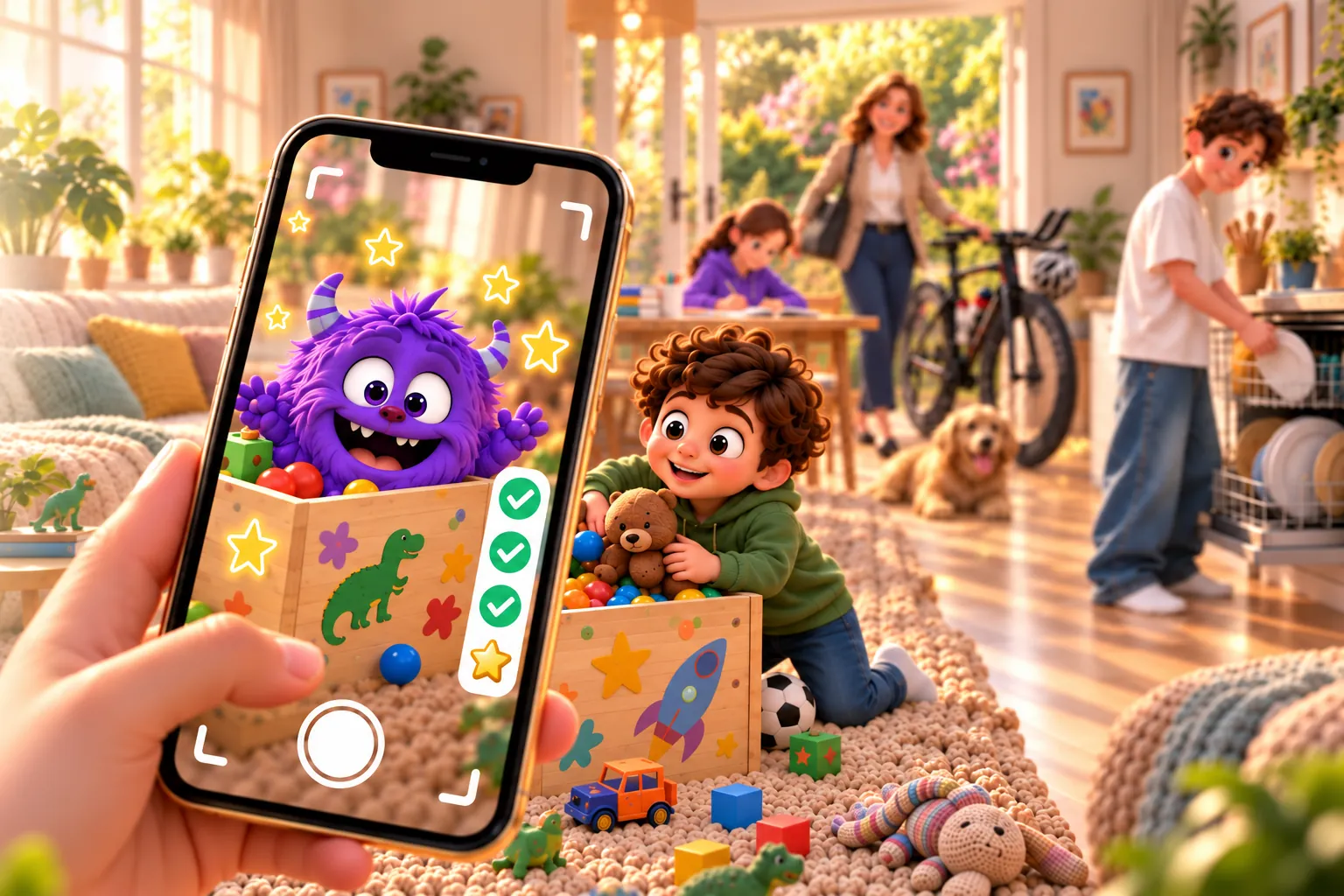
For you: hand over the reminding A photo of the mess is enough. Your child chooses what to take on.

For your child: an adventure Monsters, puzzles and songs of its own. Your child joins in because they want to.

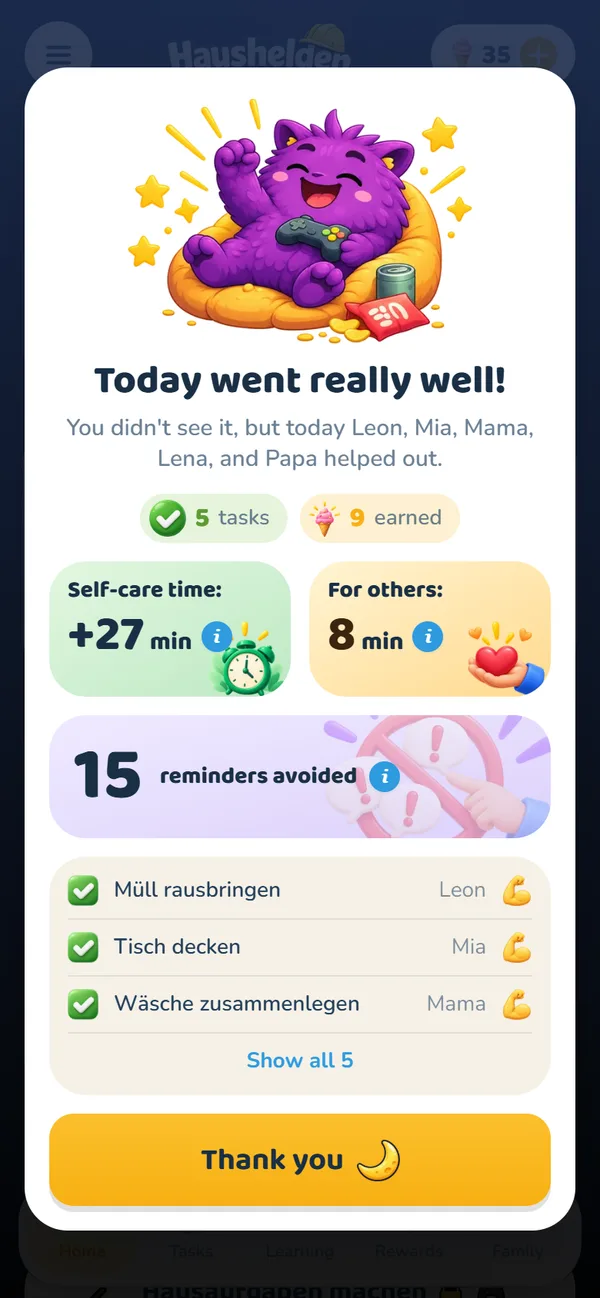
For all of you: a team again In the evening you see who did what – and say thank you.
You say it nicely once. By the third time, you’re shouting.
“I did hear you. I just didn’t feel like it – and then Mum was suddenly cross and I got banned from something.”
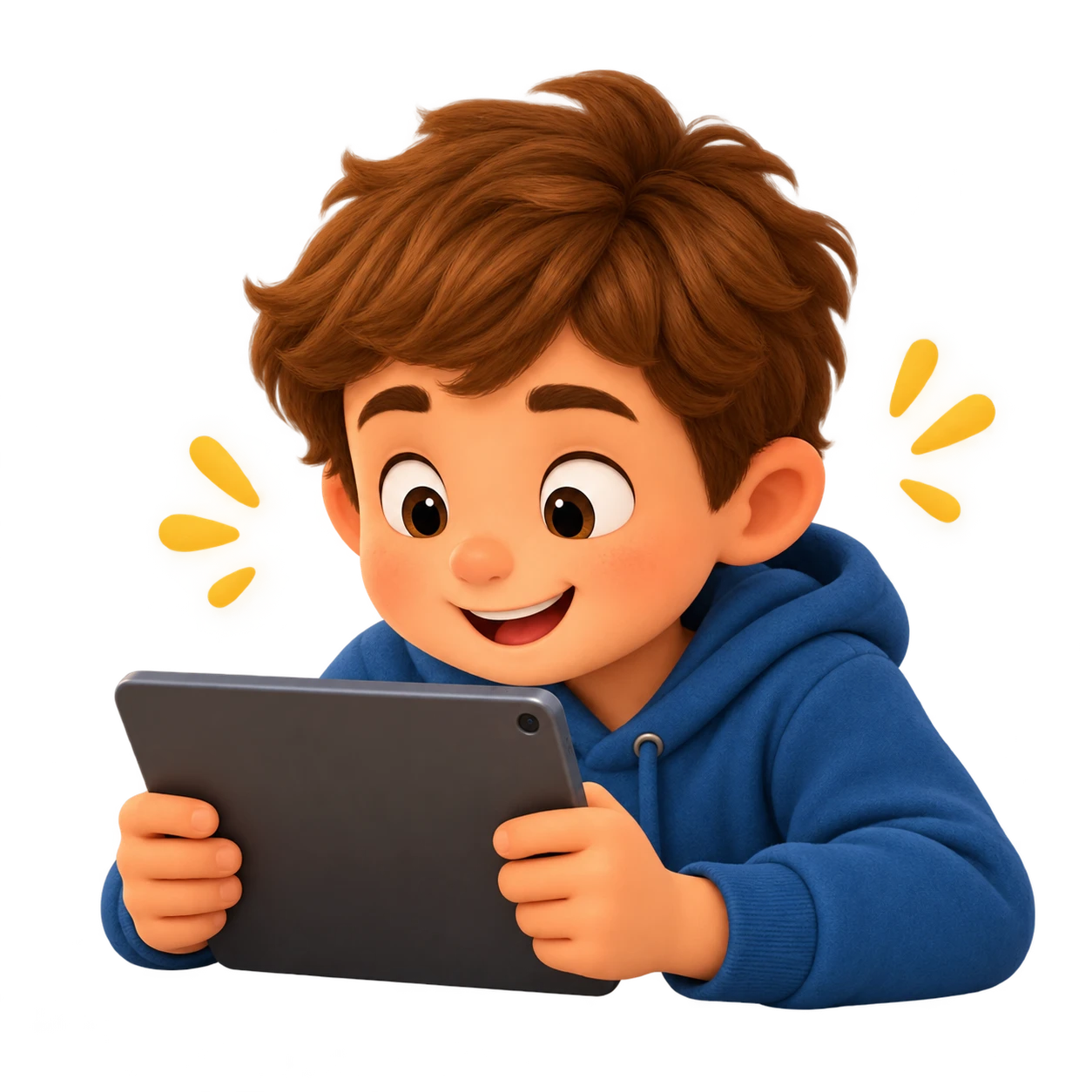
You limit screen time, and every ending turns into a battle.
“Nobody asks me how long I want to play. So I play until I get told off.”
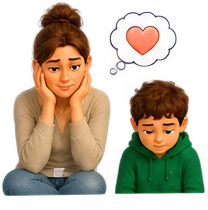
In the evening you’re tired from managing – not from your family.
“I laid the table. I didn’t feel any thanks for it at all.”
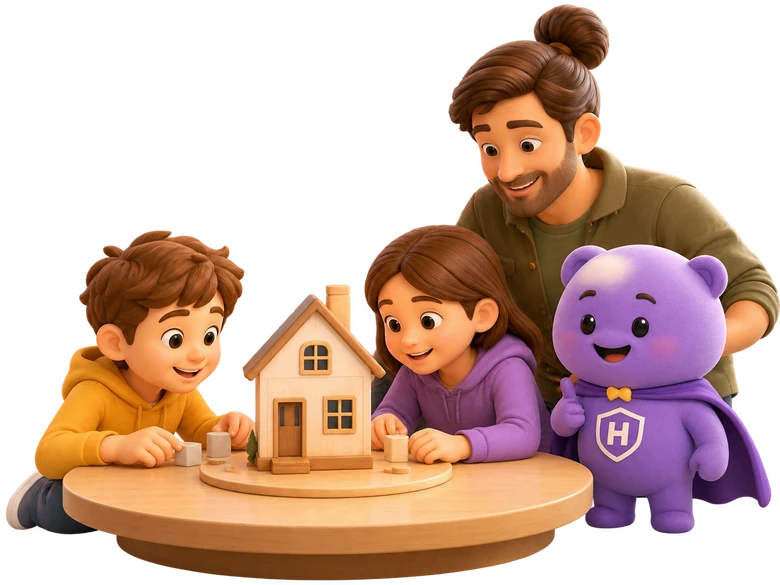
You both want the same thing. You don’t want to give orders – you want more family feeling.
Your child doesn’t want orders – they want you. ❤️
Sounds too good to be true? Then read on. Because most parents start out trying something quite different.
That’s not a mistake. It’s what we were taught – and for a few days it even works.
After a week, only one person still looks at it: you.
Then you stop arguing with your child – and they argue with the clock instead.
Things get done for as long as there’s something in it.
It works – and it feels bad for both of you.
As long as you plan, remind and check, your child doesn’t have to do any of it – so they never learn how. Every reminder takes away exactly the practice that matters: noticing they don’t feel like it, and starting anyway.
So the answer isn’t more control, but less – step by step. Planning, reminding and checking move from you to your child. You go from pushing to talking.
“I notice what is happening inside me – and decide for myself how I enable myself to make my own contribution to us.”
That is the goal Haushelden works towards with your child.
In Haushelden’s first adventure, a little monster won’t give up a sock. Children start the way we grown-ups do: with an order. Then with a reward. Both fail. Only when they work out that the monster simply needs some peace does it hand over the sock of its own accord.
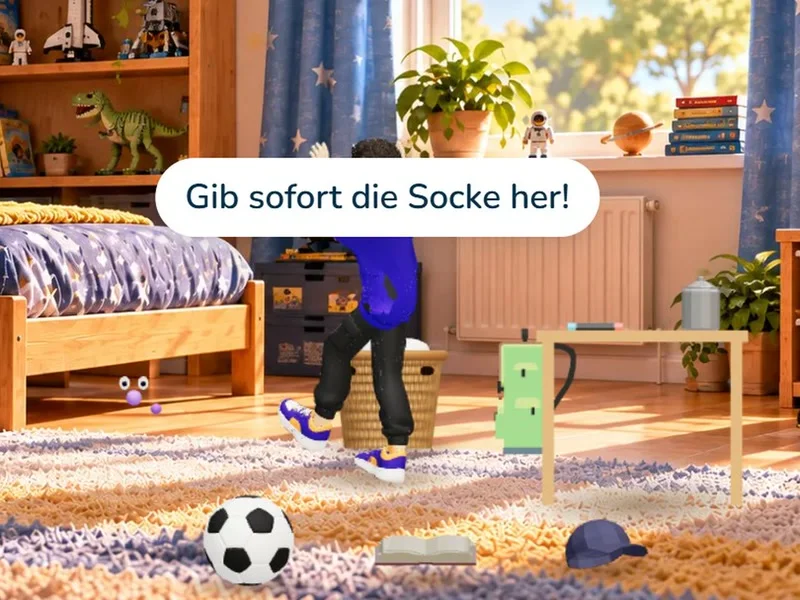
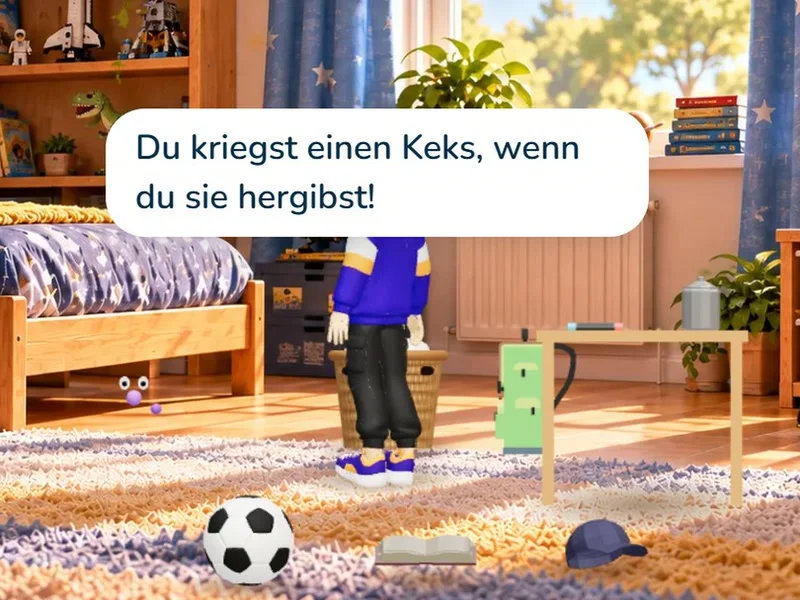
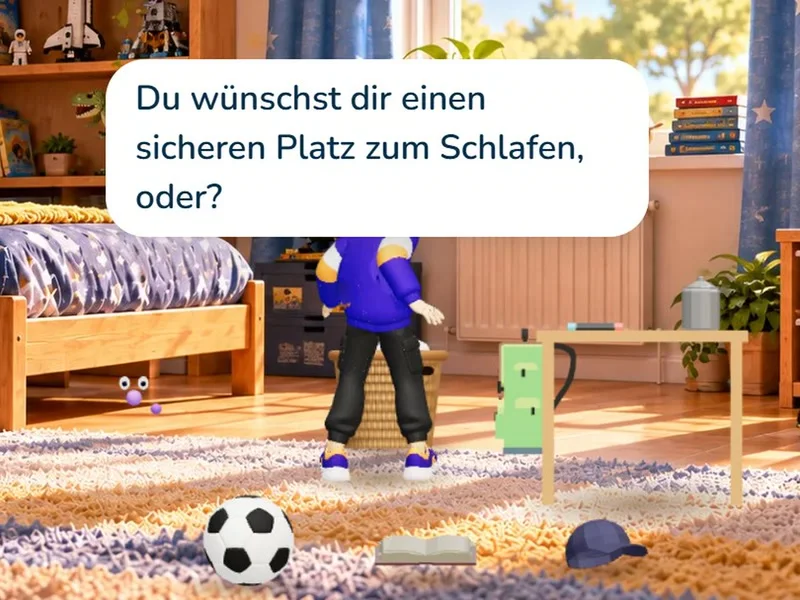
Your child learns to listen for what someone else needs. And you see why pressure doesn’t work at home.
At first the app helps a lot. Over time it steps back – exactly as far as your child can manage on their own.
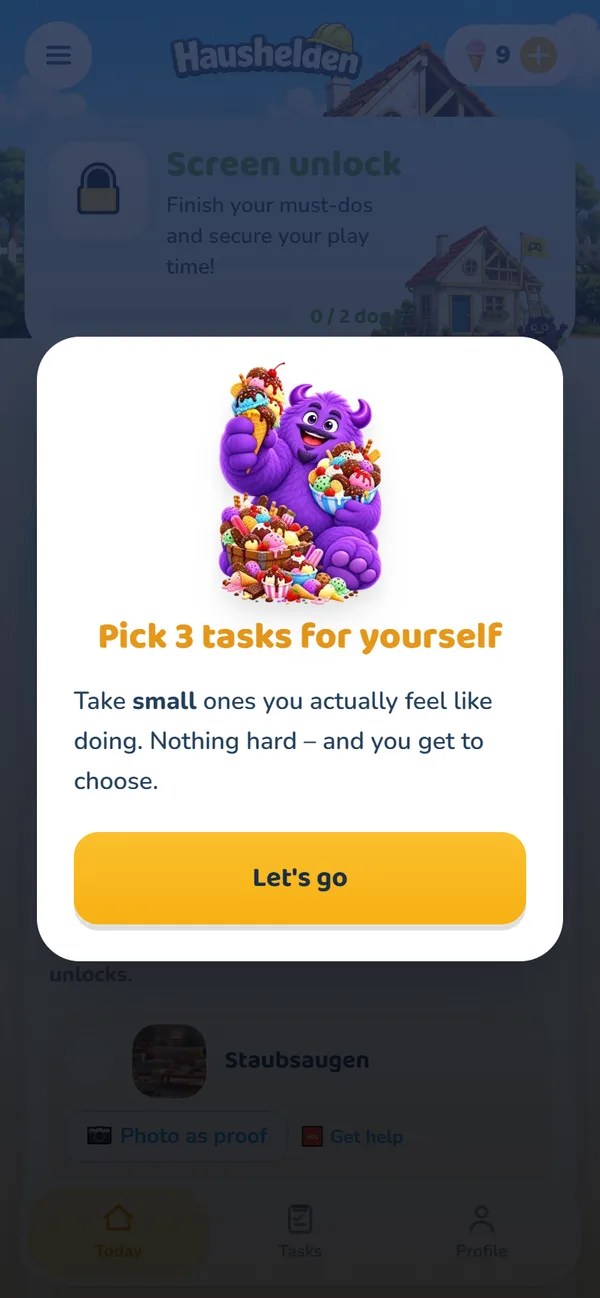
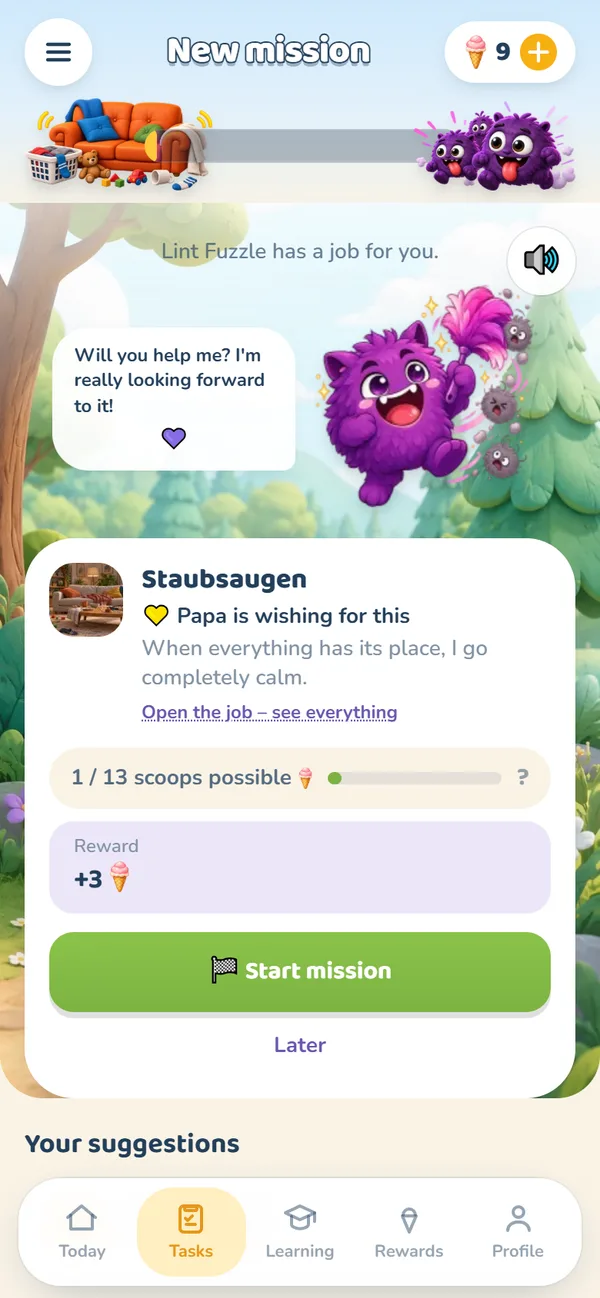
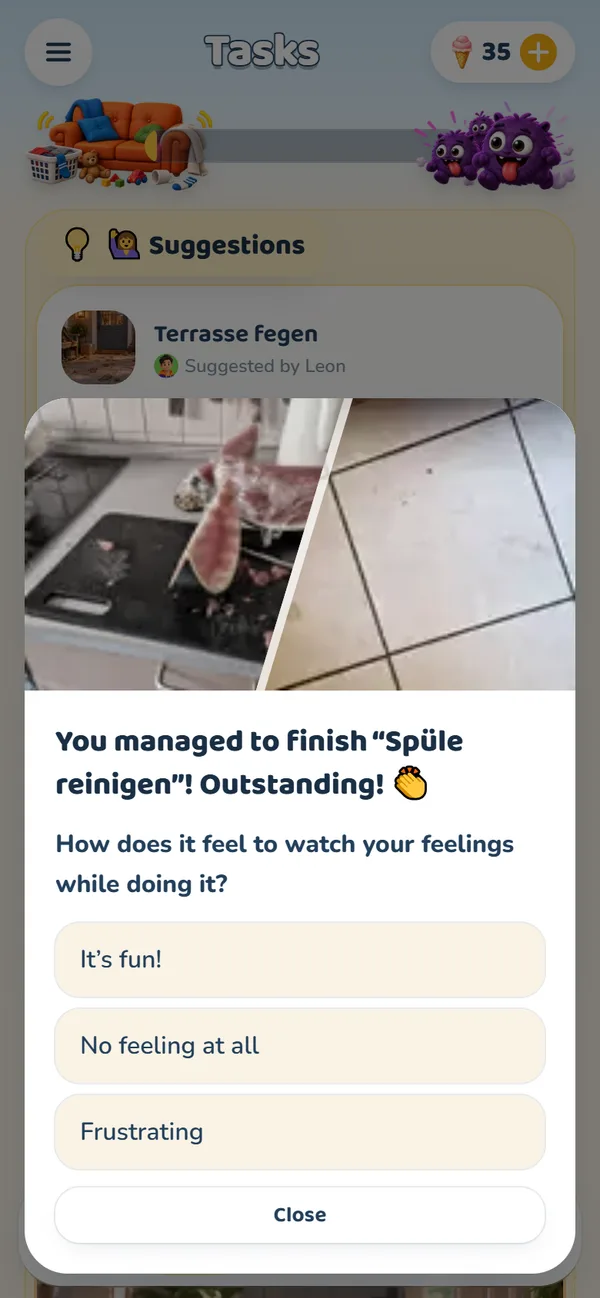
Haushelden Family
€11.95
a month · cancel any time
Final price including VAT. Paying a year in advance is a little cheaper.
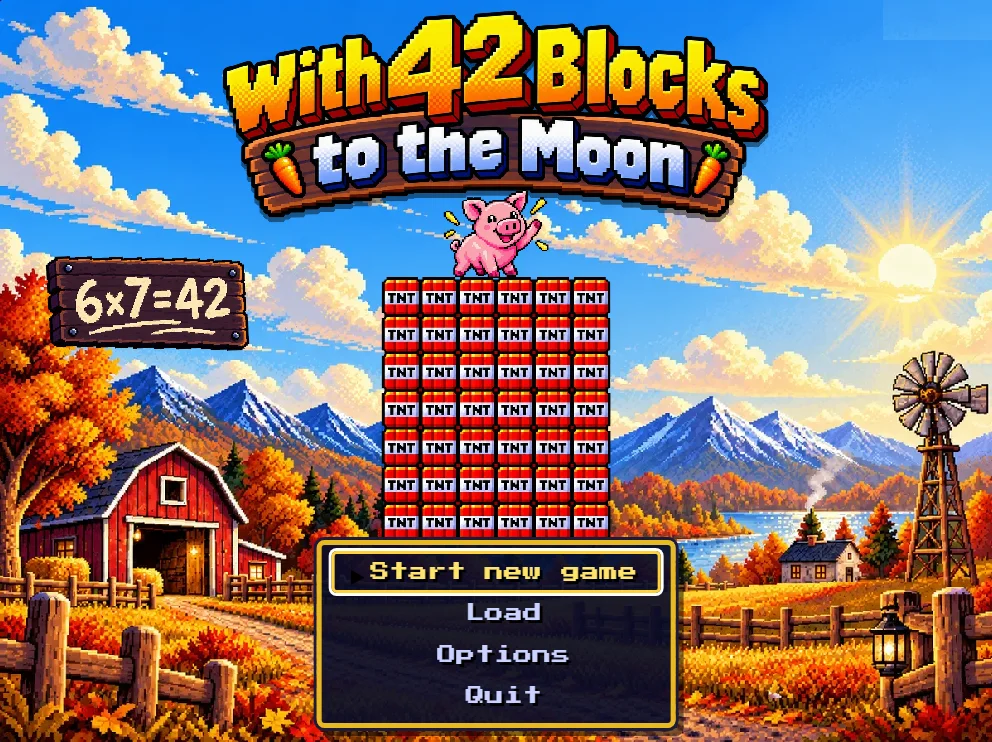
Pig on TNT? That makes 42! 💥 In the times tables game, your child learns their tables with pictures from their favourite games like Minecraft. No cramming – and you don’t have to explain a thing.
A twelve-year-old decided to get his tasks done without his parents reminding him. When he was offered an easier task, he turned it down.
First observations in practice: Children who practise with Haushelden also stick with other learning apps for longer and more independently.
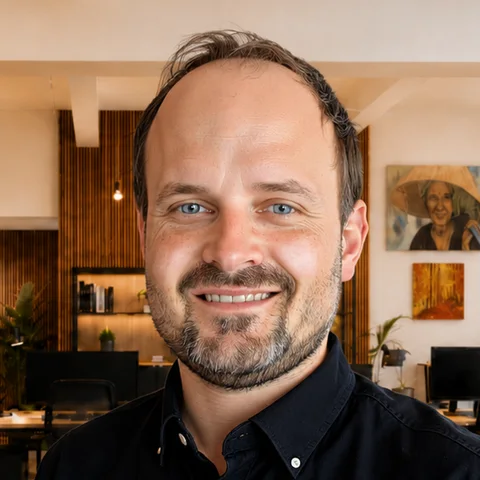
Founder and gamification designer. Designs the game mechanics to get children acting in real life, not glued to the tablet.

Educator in after-school childcare. Brings the perspective of primary school children every day.
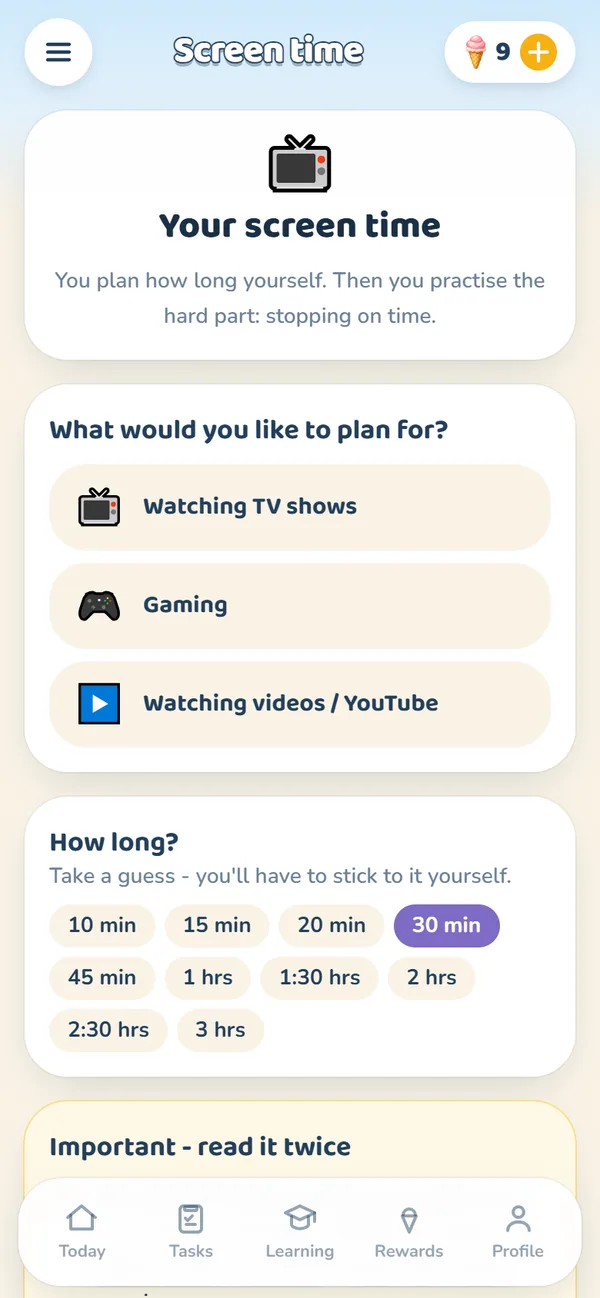
With Haushelden, the tablet isn’t where learning happens – it’s the nudge towards it. The learning happens while tidying up, laying the table and doing homework. And your child estimates their own screen time instead of having it limited only from outside.
No – on purpose. What your child says about their feelings after a task, only they can see. That’s the only way they’ll answer honestly. You see what’s been done and how much reminding it has saved you.
Yes. The monsters talk to your child in simple language – and, if you like, in your family’s language too.
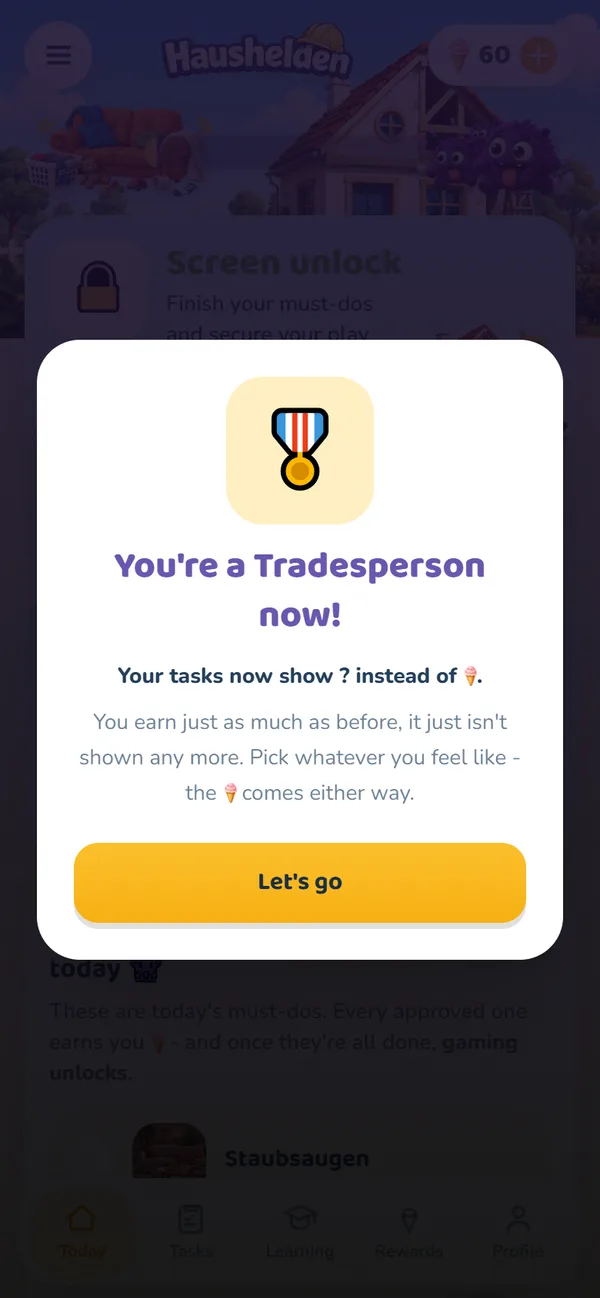
That’s part of it and doesn’t mean it isn’t working. The app scales back the rewards step by step anyway – that’s exactly when you see what has already become a habit.
Things usually start moving straight away. Turning it into a habit takes longer: a study by University College London found an average of 66 days – with a wide range of 18 to 254 days.
No. Children get access within your family – even without their own email address or smartphone.

Other apps want your child to keep playing. Haushelden wants them to get up and do something.

Most reward systems never stop. With Haushelden, the numbers disappear as soon as your child is ready.

No monitoring, no reading along. That’s the only way they learn to be honest with themselves.

Focus, starting when they don’t feel like it, keeping going – your child needs all of that for homework too.

Monsters live at Haushelden.
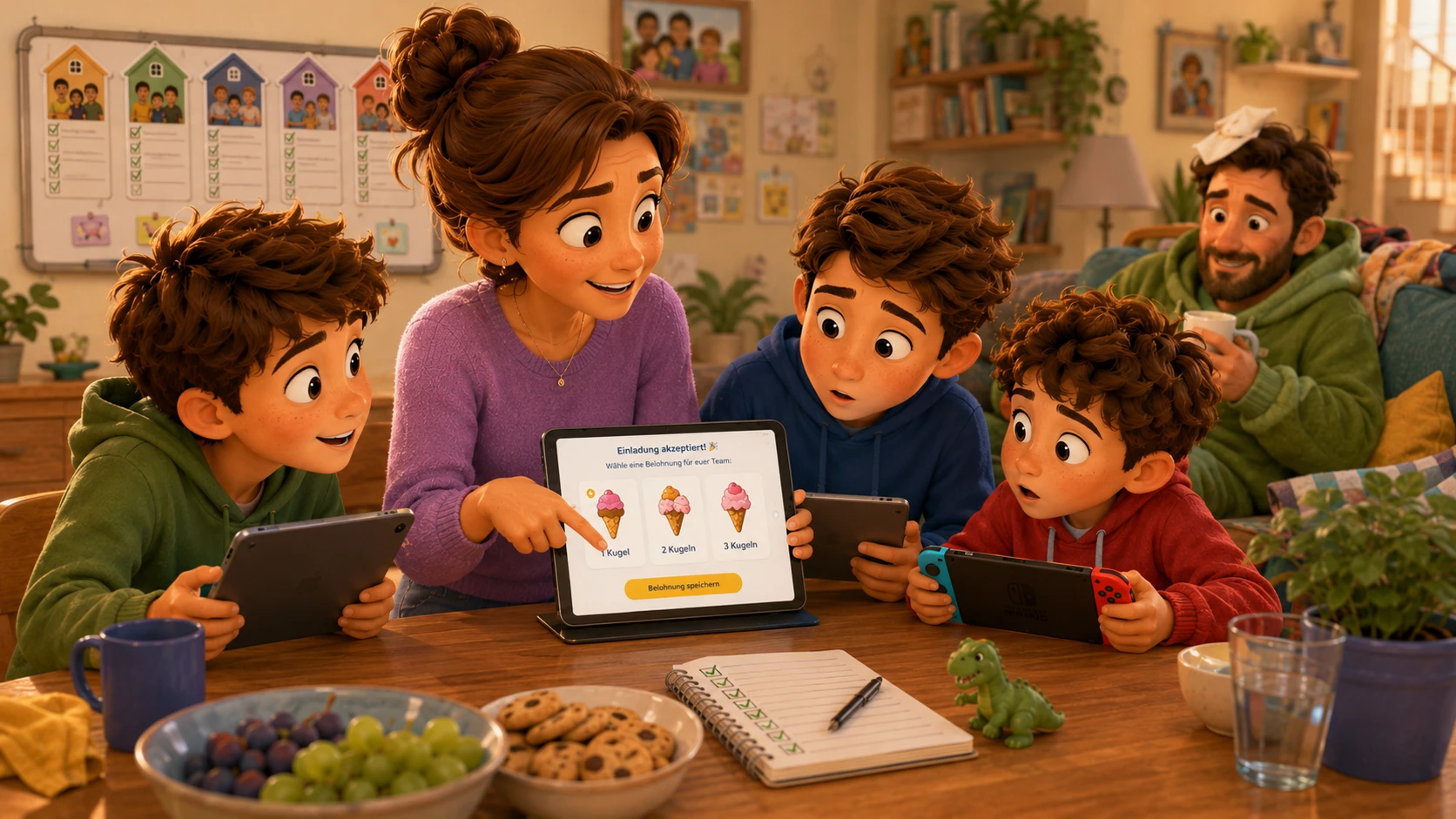
They like ice cream. And they need you.
You choose what you do.
You’re allowed to say no.
Nobody gets into trouble here.
When you manage something, you get ice cream.
And in the evening, someone says thank you.
Want to get going right away? In the times tables game you get an ice cream for every mission.
Start the times tables game🎵 The Haushelden song (in German) – “Sehen! Schnappen! Selber machen!”
You don’t have to get stricter. Just a little quieter.

From just €11.95. Cancel any time. 30-day money-back guarantee.
It takes 66 days on average for helping out to become a habit. Start today and you’ll be there in just over two months.