 Haushelden
 Deutsch
 Українська
 Español
 Polski
 Türkçe
 Svenska
 Nederlands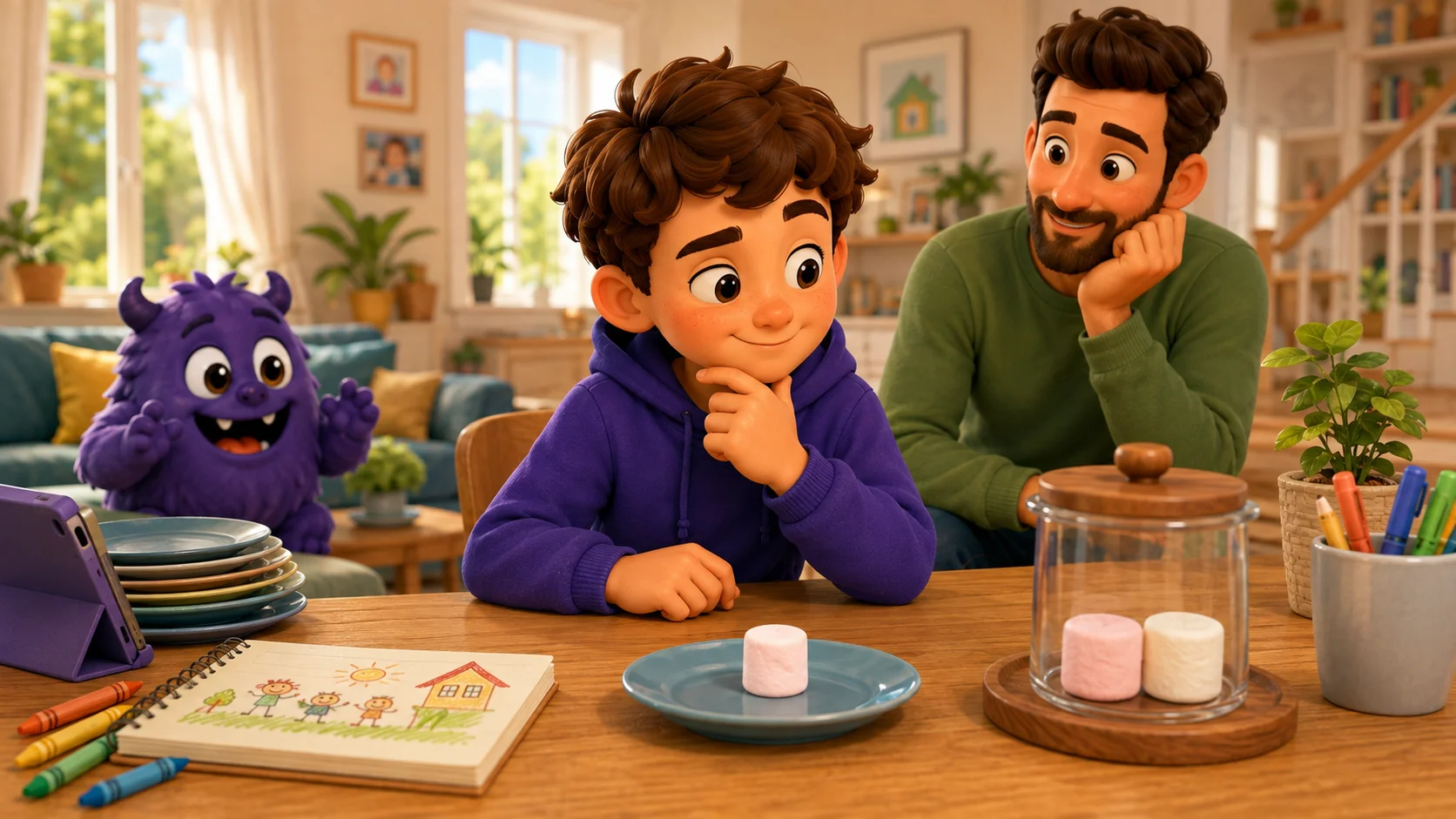
The Marshmallow Test: A child sits at a table. A tempting marshmallow lies before them. The challenge? Enjoy now or wait for two. This scene is not only a classic in psychology but also reveals much about self-control and the role of trust.
In the 1960s and 1970s, Walter Mischel conducted this experiment to understand what happens in a child's mind when resisting temptation. What began as a simple story has evolved into a profound insight into rewards and self-control.
The children sat in a room, often alone, with a single task: to wait. They developed different strategies to avoid temptation. Some sang to distract themselves, while others imagined the marshmallow as something uninteresting, like a cotton ball. These seemingly simple tactics are keys to a greater understanding of the human psyche.
 This image was created with AI
The Long-Term Impact of the Test
Many years later, researchers discovered how the ability to wait for the marshmallow correlates with later success. Children who could wait longer often showed better academic performance. However, concluding that this ability alone is responsible for success proves too simplistic.
A long-term study from 2024 examined 702 adults who had taken the Marshmallow Test as children. The results showed that waiting time alone says little about future success when other factors like family background and early cognitive abilities are considered.
These findings are important as they dispel the notion that the mere act of waiting is a magical trait guaranteeing future success. Instead, it's a complex interplay of social, economic, and psychological factors that influence a child's life. These factors are often subtle and hard to capture, but they show that the context in which a child grows up is at least as important as the child's actions themselves.
It's not about foregoing rewards, but about choosing the right timing.
Research suggests that children growing up in a more stable environment are more likely to muster the patience to wait for a greater reward. This means that it's not just the child's inner strength that counts, but also the trust they have in their environment. This trust is the key to long-term self-control.
Self-Control Can Be Learned
Self-control is not an innate ability but one that children can learn. Walter Mischel himself emphasized that successful children weren't simply disciplined but used clever strategies. They looked away, sang, or imagined the marshmallow as something else.
These strategies illustrate that self-control often means not giving temptations space rather than constantly fighting them. This is a valuable lesson not only for children but also for adults. In everyday life, we can apply similar techniques to minimize temptations, whether by removing distractions or setting clear goals.
- Distraction: Shift your thoughts to minimize temptations.
- Change perception: See the marshmallow as a cloud or cotton ball.
- Shape environment: Remove temptations from view.
The ability to develop such strategies is crucial for success in many areas of life. It shows that self-control consists not only of inner discipline but also of the ability to shape one's environment. This insight can help tackle everyday challenges better and achieve long-term goals.
An example from everyday life: If you're trying to eat healthier, you can remove unhealthy snacks from your sight. Or if you plan to read more, you could place your phone out of reach. These small changes in our environment can make a big difference in how well we stick to our goals.
Trust as the Key to Patience
A 2013 study showed that trust in the environment significantly influences the willingness to wait. Children in a reliable environment waited significantly longer for the reward than those who learned that promises aren't always kept.
This finding shows that delaying gratification is not just a matter of inner strength but also of belief in the reliability of the environment. Trust forms the basis for patience and long-term planning. When children experience that their efforts are rewarded and promises are kept, they are more likely to postpone short-term needs for long-term goals.
This insight is not limited to children. Adults also need a certain level of trust in their environment to make long-term decisions. In a workplace where commitments are honored and achievements recognized, employees are more willing to invest in the company and put their interests aside.
Haushelden: The Household as a Training Ground
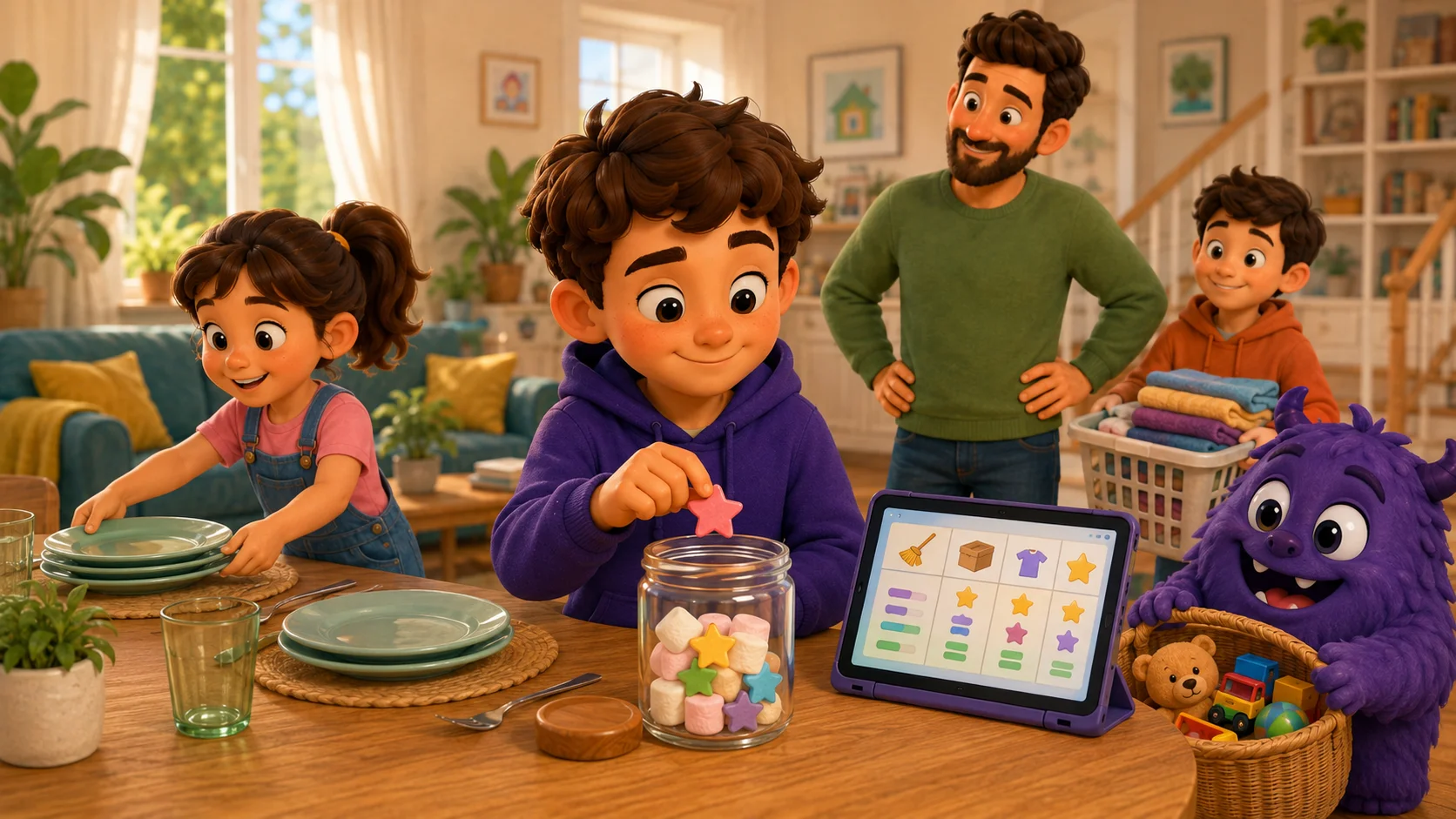
Haushelden, an app by Sabrina and Lucian Katzbach, uses everyday life as a learning field for self-control. In the household, there are many tasks whose rewards are not immediately visible—the perfect training for delaying gratification.
Instead of seeing tasks as a chore, Haushelden transforms them into a system that motivates children to think and plan long-term. Children earn rewards that are not immediately redeemed but can be saved and increased.
This approach not only supports the development of self-control but also promotes children's independence and sense of responsibility. By learning how their daily decisions have long-term consequences, they develop a better understanding of how their actions affect the future.
- Save for ice cream: Let rewards grow.
- Set long-term goals: Rewards for continuous effort.
- Build trust: Promises are kept, progress is made visible.
This way, children learn that their actions today influence their opportunities tomorrow. They experience that long-term rewards are worth the effort. These experiences are not limited to the household but also prepare them to face challenges in other areas of life.
Another advantage of this method is that it teaches children to take responsibility for their tasks. Instead of waiting for instructions from adults, they learn to make their own decisions and prioritize. This not only fosters their independence but also strengthens their self-confidence.
A Look into the Future
The insights from the Marshmallow Test show that the goal is not to forgo rewards but to have the freedom to decide for oneself. Children should learn when it's worth waiting and when it's not.
How can we convey the value of waiting in a world full of instant rewards, as digital media offers? It's about giving children the tools to make self-determined decisions in their environment.
The ability not to follow every reward immediately expands possibilities.
Perhaps this is the real lesson of the Marshmallow Experiment: Expanding choices through conscious decisions. What do you think? What strategies do you use in your family?
In a digital world where rewards are often immediately available, it's even more important to teach children to appreciate the value of patience and planning. This requires not only discipline but also the trust that efforts will pay off in the long run.
By enabling children to develop these skills in a supportive and trustworthy environment, we prepare them to navigate successfully and contentedly in a world full of challenges. And perhaps they will realize that the true value lies not only in achieving goals but also in the journey there.