 Haushelden
 Deutsch
 Українська
 Español
 Polski
 Türkçe
 Svenska
 Nederlands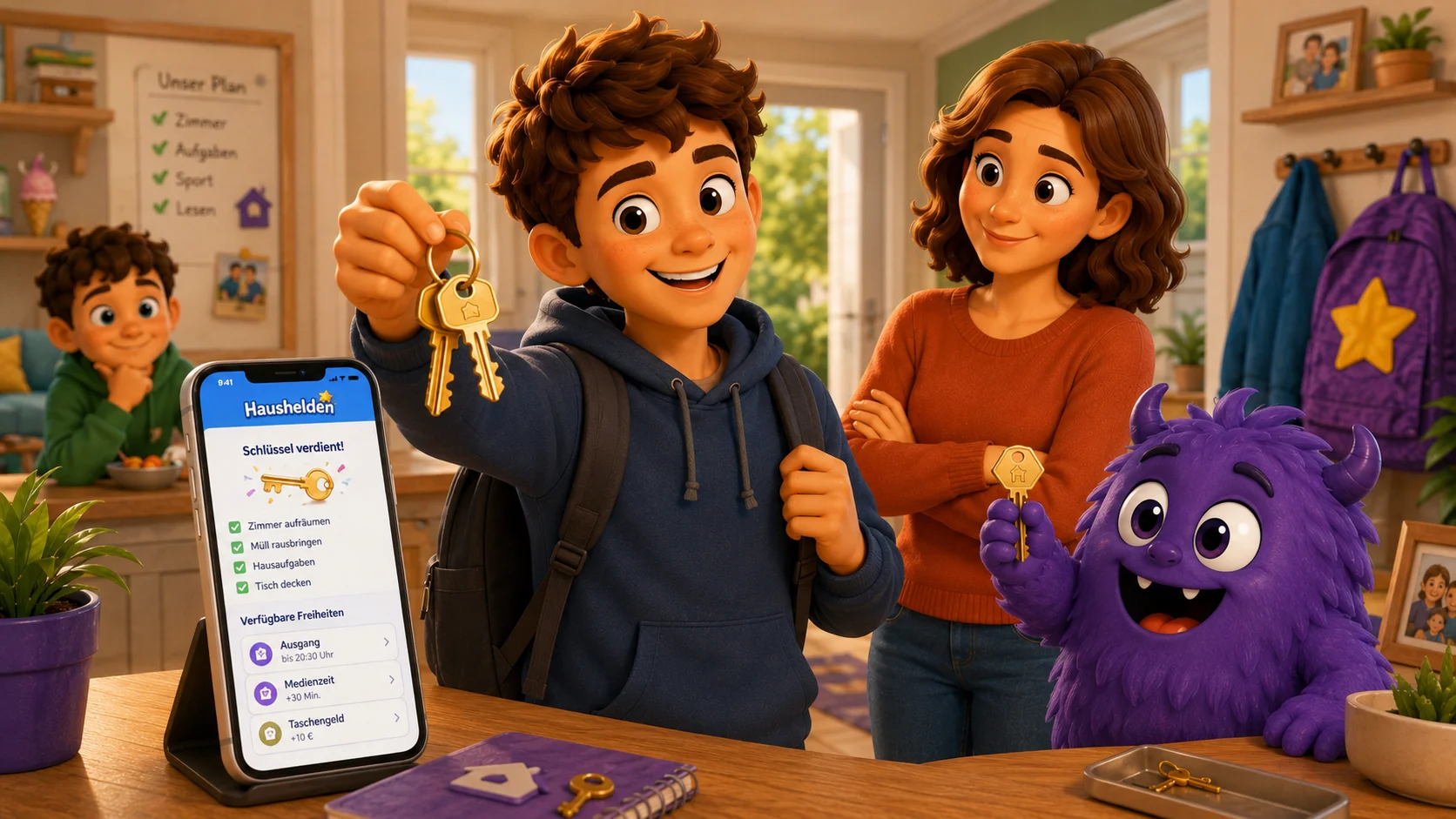
It's like tending to a garden! Our new approach to the teenage years focuses on keys instead of ice cream. These keys unlock privileges—but beware, they aren't permanent: Once earned, they can also be taken away. This teaches our kids not just to have freedom, but to use it wisely, much like a garden that only bears fruit with proper care. After all, what good is a lush garden if you don't walk through it, harvest its fruits, and use its herbs? The freedom we give our children should be viewed similarly: not just as a possession, but as something to be nurtured and appreciated.
The Challenge of Adolescence
With teenagers, it's a constant back and forth: On one hand, they want to break away from the family, but on the other, they still need it. This puts them in a tricky spot. Sometimes it seems like they've forgotten things they already learned—thanks to puberty. New neural connections that sever old ones often leave parents puzzled. Even our youngest watches in fascination as his older brother navigates this phase. The changes are confusing not only for parents but also for siblings, who suddenly find themselves dealing with a different person.
This phase, where teenagers seem to 'regress,' is actually a crucial part of their development. It's as if their brain is undergoing a major renovation, tearing down old structures and building new ones. This can lead to behavior that differs from what parents are used to. Our family's youngest once looked at his brother and said, 'Why is he doing things differently now?' This observation shows that the changes are felt within the family dynamic and require adjustments.
The Aha Moment: Keys Over Ice Cream
Instead of rewarding with ice cream, our concept uses keys. These symbolize privileges that teens can earn. But just as quickly as they are gained, they can be lost. This dynamic helps them recognize the value of freedom and use it wisely, rather than taking it for granted. An unused garden is just a piece of land—true joy comes from tending to it. Here, the key concept is a playful way to develop responsibility and awareness of one's actions.
Teens learn that their actions have direct consequences. If they don't complete a task or stick to agreements, they can lose privileges. This not only fosters a sense of responsibility but also the ability to plan long-term and prioritize their desires. The garden analogy is apt: Only those who regularly tend and invest can later enjoy the harvest.
Learning Responsibility Through Play
A special highlight of our approach is the topic of money. Teens can borrow keys or ice cream to fulfill wishes. Here, a character called the Loan Shark comes into play, regularly demanding interest. This playful introduction to the financial world shows that borrowing money comes with consequences. They learn to set priorities and reconsider their desires, like with an expensive World of Warcraft package that might not be necessary.
Imagine a teen faced with the decision of whether to spend all their allowance on a visual add-on for a game. Suddenly, they realize they also have to pay for the monthly subscription, and their allowance is running low. At this moment, the concept of the Loan Shark becomes real. The teen learns that their decisions have financial implications beyond the current moment. It's a lesson in foresight and self-discipline that will help them in many areas of life.
From Planning to Freedom
By earning and managing their privileges through the key concept, teens develop a sense of responsibility and planning. They learn that freedom is more than just the right to do anything—it's the ability to make the right choices. The bridge between planning and freedom is crucial for their development into independent adults.
When teens understand that freedom comes with responsibility, they begin to handle their opportunities more consciously. They realize that through planning and foresight, they can not only achieve their own goals but also gain their parents' trust. This trust, in turn, is the key to even more freedoms and opportunities. It's a cycle that enables them to thrive as adults in the world and use their freedom wisely.
Freedom is not just possession, but the ability to do something with it.
If you want to kickstart this process with your kids, start by rewarding small tasks with keys. Watch as they earn their privileges and learn to see them grow. In the end, it's not just the possession of freedom, but the art of using it wisely, that makes our garden bloom. Support them by setting clear rules and giving them the chance to learn from their mistakes. This way, the path to independence becomes not just a learning process but an exciting journey.