 Haushelden
 Deutsch
 Українська
 Español
 Polski
 Türkçe
 Svenska
 Nederlands
In after-school care with 80 kids, it's clear: without strict rules, chaos reigns, says Sabrina from Haushelden. The first two weeks are crucial for establishing clear structures. I start by consistently repeating the rules so they become ingrained in daily life. If a child doesn't follow them, after three warnings, there are consequences like exclusion from the play area the next day.

Imagine being in a room full of kids and everything runs smoothly. No chaos, no wild dances in the hallway, no disorganized toy boxes. Sounds like a dream? With clear rules and consequences, this dream can become reality. But how do you get 80 kids to follow the rules? The secret lies in repetition.
In the first two weeks after the holidays, the children are still relatively calm. But then, once they've settled in, they show their true colors. They test boundaries, dance through the hallway, don't tidy up, and fool around when they should be quiet. This testing phase is crucial. It gives the children the opportunity to understand the rules of the environment and learn what is acceptable and what is not.
Why does this happen? It's simple: the kids are trying to find out how far they can go. They want to know if it's like at home with mom and dad. When do the teachers scold? When are there consequences? This is their way of exploring the rules. And here's the opportunity! Kids are naturally curious and want to explore the world around them – this includes the social rules that surround them daily.
The challenge is to channel this natural urge to test into orderly paths. By setting clear and consistent rules, you create a framework in which children can safely experiment. It's important not only to explain the rules but also the reasons behind them. Children often understand more than we give them credit for. If they know a rule is there to help them and others, they are more likely to follow it.
The Path to Clear Rules
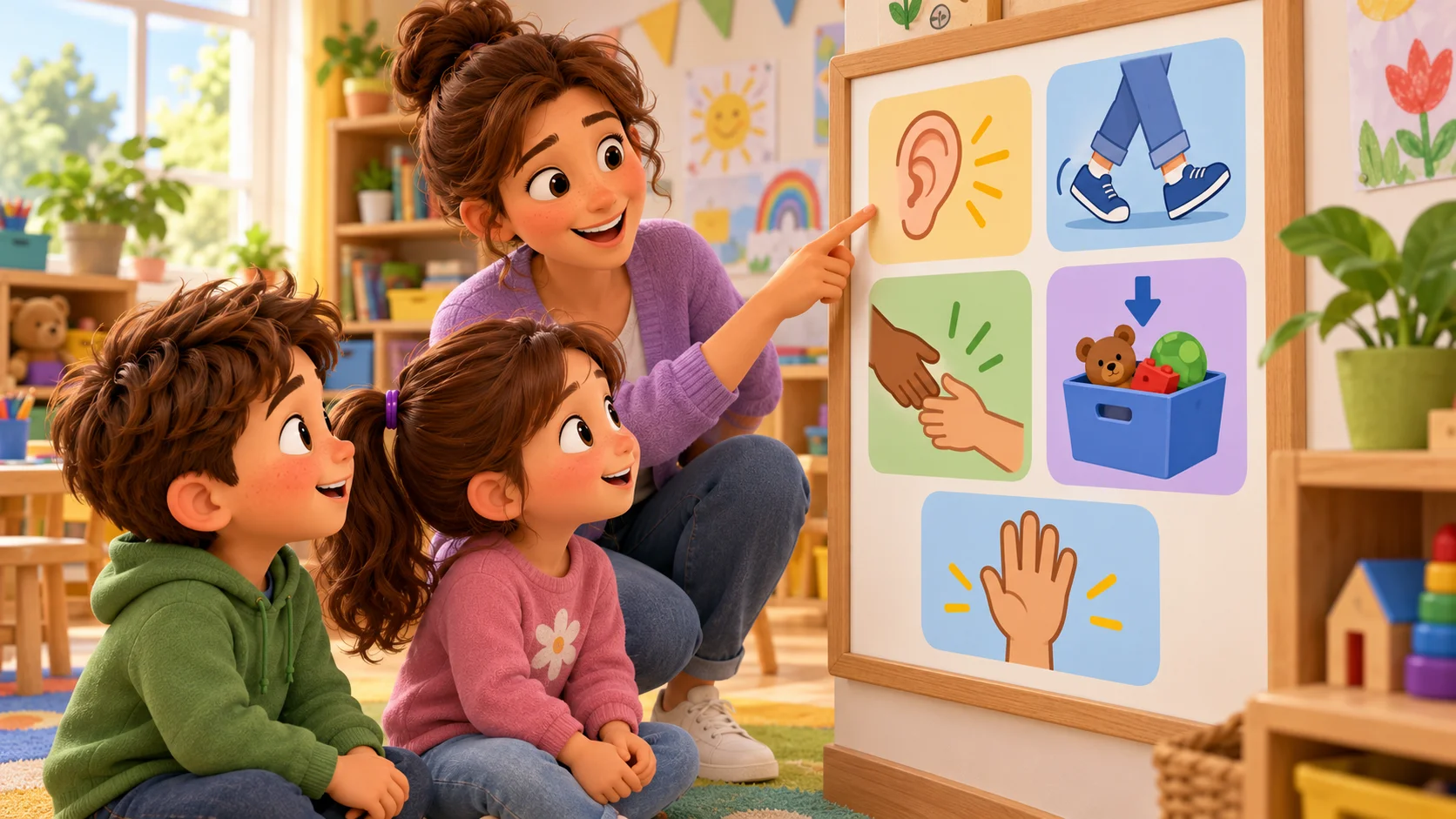
- Establish rules: Start with clear rules that you repeatedly explain to the children. Use simple language and illustrative examples so they can easily understand the rules.
- Set consequences: Determine what happens when rules are broken. These consequences should be immediate and understandable so the children see the connection between their behavior and the response.
- Strict implementation: Be particularly strict in the first 2 to 3 weeks to embed the rules. During this phase, it's important to make no exceptions to show the children that the rules are taken seriously.
- Enforce consequences: After three warnings, consequences follow to reinforce the rules. This helps the children grasp the seriousness of the rules and promotes discipline.
The first steps are crucial. It's about making it clear to the children from the start that the rules are non-negotiable. Especially in the initial phase, it's important not to make exceptions. Even if it's difficult to remain consistent, it pays off in the long run. The children quickly learn that the rules are serious and begin to follow them.
However, strictness alone is not the key. The children need to understand why these rules exist. If you explain to them that setting up the chairs is important to keep the room tidy and prevent tripping, it makes sense to them. This type of explanation helps the children see the rules not just as annoying regulations but as sensible measures.
Once the rules are established, you can loosen the reins a bit. The children have internalized the rules and know what to expect if they don't follow them. Chaos is avoided, and daily life runs smoothly. It's important to give the children positive feedback when they follow the rules. Praise and recognition are powerful tools to encourage good behavior.
But success doesn't depend solely on the teachers. Parents need to pull together. If a child is picked up for misbehaving and then rewarded at home with ice cream and PlayStation, it undermines our efforts. It's crucial that parents and teachers work together to send consistent messages to the children.
Being a teacher is not the same as being a parent. Parents often have an emotional bond that makes it difficult to remain objective. Your own children know you love them, no matter what. This unconditional love is important but can also lead to less consistent enforcement of consequences. Here, dialogue between teachers and parents is essential to ensure consistent upbringing.
"Being a teacher is not the same as being a parent. Your own children know you love them, no matter what."
It takes the collaboration of parents and teachers to sustainably change children's behavior. Parents who feel overwhelmed should not hesitate to seek help. The family center offers support, even without an appointment. Sometimes a neutral third party can help view the situation from a different perspective and find solutions.
Another important aspect is communication. Parents should regularly engage with teachers to discuss their children's behavior. This not only builds trust but also allows for early problem-solving and finding solutions together. Open dialogue is the key to successful collaboration.

Three Tips for Parents Seeking Support
- Be more consistent: Set clear boundaries and stick to them. Consistency is key in parenting. If rules are repeatedly broken without consequences, children learn they don't have to be taken seriously.
- Increase communication: Talk to your child about their behavior and needs. An open ear and understanding of the child's problems can work wonders. Try to understand the reasons for the behavior and find solutions together with your child.
- Seek external help: Use counseling services for support. There's no shame in seeking help. Often, an external advisor can offer new perspectives and solutions that aren't obvious in everyday life.
At the end of the day, it's about providing children with clear structures so they know where they stand. These structures help them feel safe and secure. An orderly daily routine is possible when everyone pulls together. The collaboration of teachers and parents is essential to provide the best possible support for the children.
How do you handle rule-breaking? Have you ever experienced that a clear structure made a difference in daily life? It's worth considering how we can overcome the challenges of parenting together. Because in the end, it's the combination of consistency and understanding that helps our children navigate the world.