 Haushelden

 Deutsch
 Українська
 Español
 Polski
 Türkçe
 Svenska
 Nederlands

Dear parents, I want to tell you about a misunderstanding that affects many of us. We all believe that distributing information through notes and parent-teacher meetings works. But the reality is different: printed letters don't reach you, and important notices go unnoticed. This leads to children being disappointed when they can't go home as planned. These communication problems are no small matter – they create unnecessary conflicts and burden us all.

Why the Obvious Solution Won't Help You
Many of us think that more notes or another parent meeting are the solution. That sounds logical at first, right? If everyone were just more informed, it would work. But here's the catch. Reality shows that more of the same often doesn't bring the desired result. More notes mean more chaos, more parent meetings mean more appointments to squeeze into the already full family calendar.
An example from practice: At the art club on Tuesdays, all children should arrive on time. But the supervisors don't know which children are actually registered. The information is somewhere, but it doesn't reach the right people. The problem starts with the distribution of information. Parents and children are often unclear about what happens when because the messages don't reliably arrive.
The unclear communication leads to parents showing up on the school grounds in the middle of the day because they believe their children are done with school. Meanwhile, the children are sitting obediently in class or, worse, missing important lessons because they are taken away by their parents. These misunderstandings are not only nerve-wracking but also unnecessary and could have been avoided.

The Real Problem Starts One Level Earlier
Unfortunately, more information doesn't solve your real problem. The true mechanism is that information must not only flow but also be used and understood. It's not enough for a note to exist somewhere. Information must be targeted to the right place and then also be noticed. That sounds simple, but in practice, it's often a challenge.
For example, at my son's school, there are regular parent letters containing important information. But often these letters get stuck in school bags or are lost on the way home. When I then ask what's planned at school, I only get puzzled looks. This is where the problem starts: the information is there, but it doesn't effectively reach its destination.
Another example: parent information about school clubs. Many parents register their children for these activities but don't know exactly when and where they take place. As a result, children miss their clubs or don't participate at all. The responsibility to clarify this often falls to the supervisors, who don't always have all the information at hand. A vicious circle.
- Lack of knowledge about schedules: Parents and children don't know when school ends.
- Missing club information: Children miss clubs because information isn't passed on.
- Unclear pickup points: Parents often don't know where to pick up their children.
What Needs to Happen Instead
The key lies in effective and centralized communication. Information must not only be accessible but also actively used. This means that all parties involved – children, parents, and staff – need to be informed in a reliable and simple way. A central platform that provides all relevant information could help here.
Imagine all information being collected in one place and accessible at any time. No more lost notes, no missed parent meetings. A digital platform could help distribute information in a structured and clear way. This would not only be a step forward in terms of organization but also a huge relief for everyone involved.
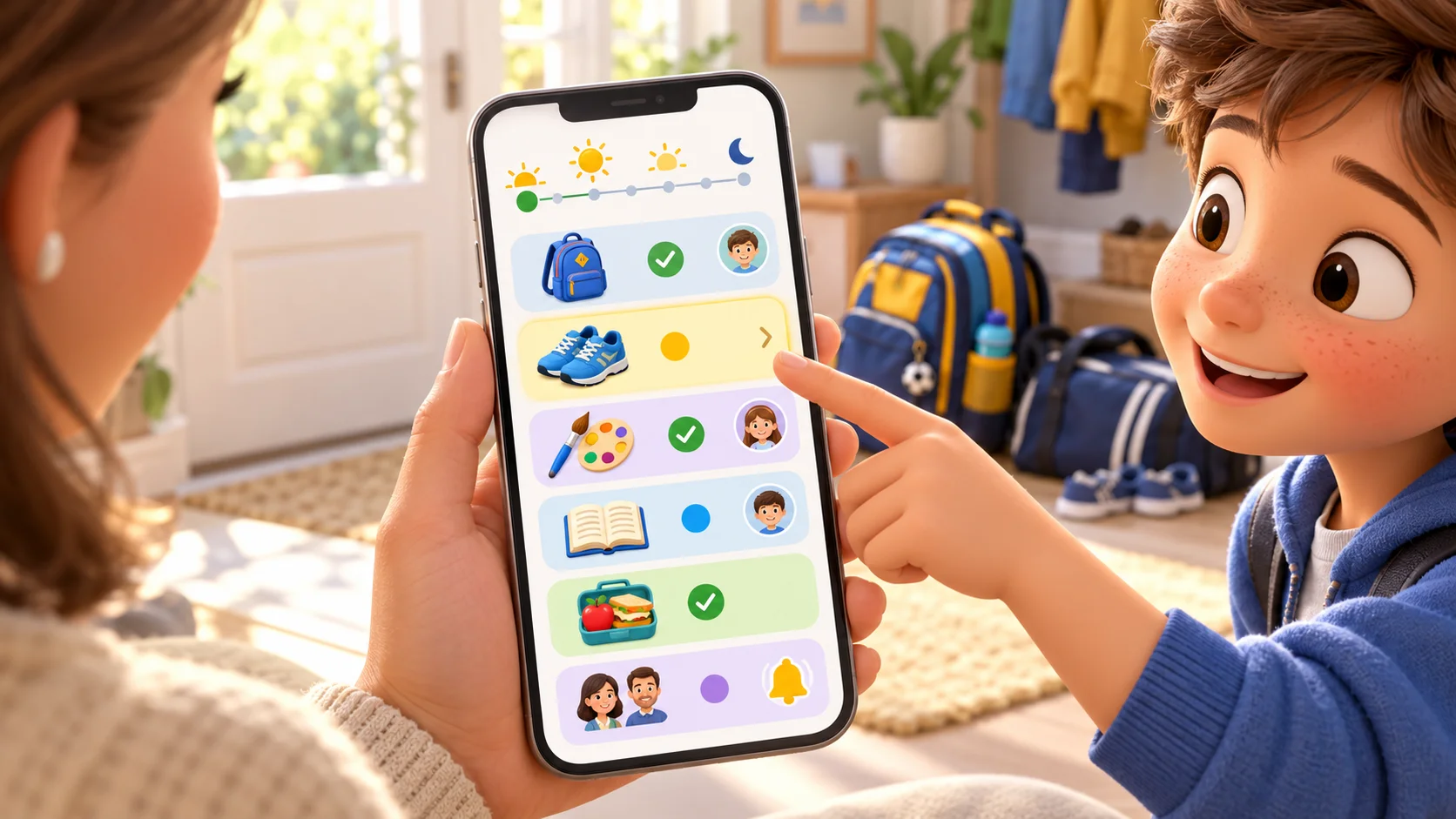
Apps like the School Manager could offer a solution here. They centralize information and make it accessible to everyone. Parents could check at any time which clubs are scheduled, when school ends, or where to pick up the children. It would be a step towards modern and efficient communication.
Evidence from Practice
Practice shows that digital solutions do work. Take the example of schools that have switched to digital communication. Studies show that misunderstandings and communication errors could be drastically reduced. Parents and teachers have a better overview, and children benefit from clearer organization.
Another example: a school introduced an app to convey information to parents. Within a few weeks, participation in clubs was better organized, and fewer children missed important appointments. Parents felt better informed and could support their children more effectively.
These examples show that moving away from paper chaos to digital solutions is not only feasible but also sensible. It reduces stress for parents, teachers, and staff and ensures that the actual educational work can take center stage.
- Fewer misunderstandings through centralized information.
- Better participation in school activities.
- Less stress for parents and staff.
Shaping the Future Together
Imagine how much more relaxed everyday life would be if all information were centrally available in one place. No more chaos, no missed clubs, and no disappointed children. It's time to rethink and explore new paths. Modern communication can significantly ease the daily lives of everyone involved.
Talk to other parents, the school, or the after-school care about what such a solution could look like. Maybe it's time to finally say goodbye to paper chaos. Because it's clear: the challenges of everyday life are not getting any less. But we can learn to manage them better.
The solution lies not in more information but in better information. If we set out together, we can revolutionize communication in schools. And that ultimately benefits everyone – especially our children, who will receive the support they need.
The solution lies not in more information but in better information.
What do you think? What would be the best solution for you to tame the chaos? Let's think together about how we can make everyday life easier for us and our children.