 Haushelden
 Deutsch
 Українська
 Español
 Polski
 Türkçe
 Svenska
 Nederlands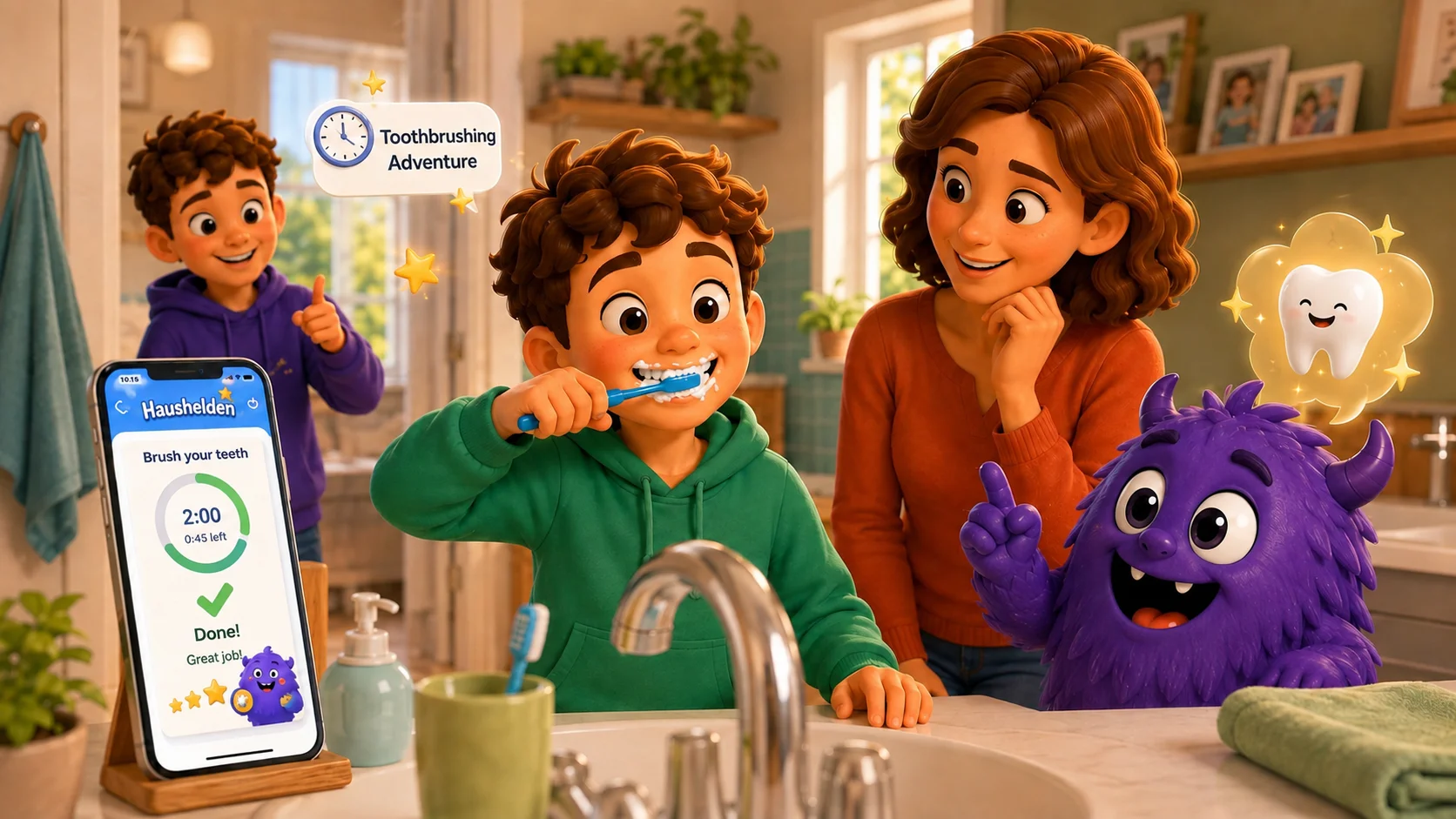
Sabrina, who works in an after-school care program, interacts with 25 children daily. In total, she oversees around 100 kids. What she observes might sound familiar to many parents: for most children, brushing their teeth is just plain boring. But why is that?
Toothbrushing: Laziness or Lack of Understanding?
Many parents think kids are just lazy when they don't want to brush their teeth. After all, everyone knows the feeling that brushing is just a tedious task. But Sabrina has gained a different insight. For many children, there's simply a lack of understanding as to why this routine is important. They see it as a boring chore without grasping the bigger picture.
Children who are never really explained why brushing teeth is necessary don't develop the motivation to take this task seriously. Sabrina has shared stories of kids who barely brushed their teeth throughout elementary school. Not out of laziness, but because no one ever explained the importance of this routine to them. They see it as one of many annoying duties, much like eating healthy or doing homework.
Sometimes it's not just the lack of understanding, but also how toothbrushing is presented. If it's always framed as a mandatory task, there's no incentive to engage with it. It can be a challenge to get kids to willingly pick up their toothbrush.
The Key to Motivation: Fun Over Duty
So how can we change that? The approach needs to be different: turn toothbrushing into a fun ritual! Kids love games and challenges. So why not turn brushing teeth into a game? A small routine where they can win over and over again could work wonders.
In Sabrina's care program, it's clear: kids who find joy in an activity do it willingly and happily. One option could be linking toothbrushing with a reward. Or accompanying it with a funny story or a song. These small tweaks can make all the difference. Maybe even an app that makes progress visible in a playful way could help. Like the Haushelden app, which turns everyday tasks into exciting challenges.
Another advantage is that children often don't even realize they're fulfilling a duty through playful elements. They're engrossed in the game, collecting points or winning small prizes. And that's the point: the focus is on fun, not duty. This way, brushing teeth gets done almost as a byproduct.
Why a Playful Solution Works
Why does it work? Kids are naturally curious and love to play. They want to explore the world and have fun doing it. When you put toothbrushing in a playful context, you're giving them just that: a chance to rediscover something ordinary. Sabrina has seen kids who usually dislike showering suddenly enjoy it when it becomes part of a game. The same goes for toothbrushing.
So if you notice your child finds brushing teeth tedious, think about how you can make it more exciting. Maybe a timer that tracks time or a little contest where they can collect points will help. The important thing is that the child no longer sees the task as a duty but as part of a game.
It's about showing kids that even everyday tasks can be fun. When they have the chance to be rewarded for small successes, they perceive the task much more positively. And the best part: they learn to take responsibility and develop routines along the way.
Playful Routines as the Key to Success
The insight is clear: kids need motivation, not coercion. And this motivation often comes from playful approaches. If you turn your child's everyday tasks into an adventure, they'll approach them with joy. The Haushelden app can be a helpful tool to integrate this playful approach into daily life.
Try it out and watch how your child's attitude changes. You'll see that they enjoy it more and look forward to daily routines. And who knows? You might find that toothbrushing becomes a little highlight in your day too. 🦷✨
Once children understand that their efforts are rewarded, they'll be more motivated to complete their tasks. It's the small change in everyday life that can make a big difference. And ultimately, everyone benefits: children who learn responsibility and parents who have less stress with daily routines.